Complimentary Ground Shipping on All U.S. Orders | Details

Explore the Legacy that Inspires the Brand
Arie Fransen DeLong settled in New York's Hudson Valley in the late 17th century and founded a prolific dynastic line that would build empires in hardware and ranching, marry into one of America's great fortunes, and become entangled in the most sensational jewel heist of the 20th century.
Waterboy and James Ben Ali Haggin by Gean Smith, Collection of National Museum of Racing and Hall of Fame
Z.I. MOVES TO GLENS FALLS
Born in 1815 in Saratoga County, Zopher Isaac DeLong worked as a farmer, lumberman, and proprietor of a general store. He married Catherine Lewis Scott in 1838, served as town supervisor and justice of the peace, and had eight children. Around 1860, he moved his family north to Glens Falls, located where the Hudson River exits the Adirondack Mountains—the critical waterway for the exchange of goods and supplies between the Adirondacks and New York City.
There, Z.I., as he preferred to be called, and his son Theodore purchased an interest in Daniel Peck’s hardware business on Warren Street. When Peck retired in 1862, Z.I. renamed the firm DeLong & Son. He later brought in another son, John, and the business became DeLong & Sons, a prominent hardware enterprise that would operate under the family name for more than 70 years.

THE GREAT FIRE
On May 31, 1864, fire swept through downtown Glens Falls, destroying the DeLong & Son store on Warren Street along with much of the commercial district. The following year, the firm reopened in a new building on Glen Street. As Glens Falls rebuilt, so did Z.I.’s business—and his prosperity grew with it.

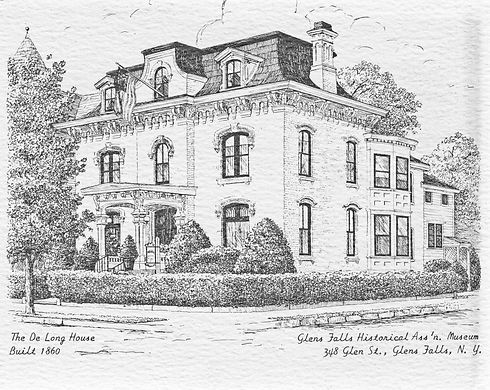
THE DELONG HOUSE
In 1860, Z.I. and Catherine had purchased a modest wood-frame home at the corner of Glen and Bacon Streets. With the family’s rising fortunes, Z.I. commissioned architect Marcus Fayette Cummings to transform it. Between 1867 and 1869, the house was remodeled into a two-and-a-half-story brick residence in the Second Empire and Italianate styles, complete with a mansard roof, cast-iron window moldings, and decorative brackets under the eaves. A local newspaper called it the “finest example of Victorian architecture in the region.”
Inside, the house reflected the life of a prosperous merchant family on the Adirondack frontier: a parlor for formal entertaining, a library with an upright piano and musical instruments, a dining room set with elaborate silverware and china for hosting business associates, and upstairs bedrooms outfitted with the hardware of the era—oil lamps, gas lighting fixtures, washstands, and chamber pots to spare trips to the outhouse in winter. Household staff attended to the elaborate meals and daily operations of a home with eight children.
For a century and a half, the DeLongs spent summers on the east side of Lake George. The family compound was situated on Kattskill Bay and Z.I. gifted five adjacent lakefront lots to his sons.
Z.I. remained active in Glens Falls civic life, serving as president of the village corporation and Queensbury town supervisor, until his death in 1901, at the age of 85. His son John took over the house and remodeled it to reflect more modern tastes and conveniences, including one of Glens Falls’ first indoor bathrooms.


FRANCIS DELONG MOVES WEST
Meanwhile, Z.I.’s cousin Francis DeLong, having worked in leather tanning for 20 years, sailed from New York to California’s San Francisco Bay area via the Isthmus of Panama. Francis, his brother James, and a partner, William McNeil, started a grocery business—DeLong, McNeil & Co.—in 1850. When they were burned out, they reopened as a hardware business. There, Francis met his future business partner, Joseph Sweetser.
In November 1856, Francis and Joseph purchased the 15,000-acre Rancho Novato. At the time, there was not a great deal of fresh fruit out west, so they planted 44,000 fruit trees, establishing the world's largest orchard. They went on to ship fruit, vegetables, apple cider, cider vinegar and cattle internationally, and Francis became one of the wealthiest men in California.
In 1879, Francis bought out all of Sweetser’s holdings except for one square mile—now Downton Novato.
FRANK COYE DELONG
Francis’s son, Frank Coye DeLong, worked from the age of 18 as a clerk at Rockwell, Coye & Co. hardware in San Francisco for 11 years. In 1873, he took charge of his father’s San Francisco office, moving in 1879 to help manage Rancho Novato. In 1884, he was elected to State Senate from the Fifteenth District, Marin and Contra Costa, and reelected in 1888. Frank inherited Rancho Novato when Francis passed in 1885.

GEORGE BOWEN DELONG
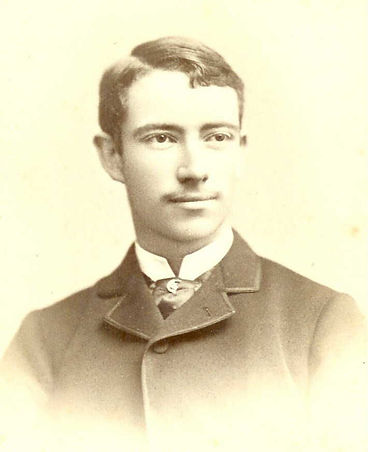
Named for his grandfather, New York Supreme Court Justice George D. Lamont, Frank’s son George Bowen DeLong won the Pacific Coast Men’s Doubles Tennis Championship in 1893 and graduated from Stanford University in 1896. He became a real estate broker and attorney, and served with the Red Cross in World War I.

GEORGE MARRIES GILDED AGE HEIRESS EDITH HAGGIN
In 1917, George, then 42, married prominent New York Society figure Edith Haggin Lounsbery, 59. Edith was an heiress twice over, having inherited fortunes from both her first husband and her father.
Richard Purdy Lounsbery, Edith’s first husband, was a Wall Street broker with interests in numerous mining corporations. He was from a well-established New York family, and an accomplished sportsman and yachtsman. Their marriage brought California-born Edith into New York Society, where she became known as a woman of refinement and social standing. Richard died at Jocuistita Hall, his ancestral home in Bedford, in 1911 at the age of 66.

EDITH DELONG'S FATHER WAS JAMES BEN ALI HAGGIN
Edith was born on July 15, 1858, in San Francisco, the daughter of Eliza Jane Sanders and mining tycoon and famed horseman James Ben Ali Haggin, one of the wealthiest men in America.
Born in Harrodsburg to one of Kentucky’s oldest families, James was also the grandson of Ibrahim Ben Ali, an early American settler and prominent physician from Ottoman Turkey.
The first Turkish-American lawyer in the U.S., James came to California in 1850 with his brother-in-law, future Wells Fargo Bank president Lloyd Tevis, settling in San Francisco. In the course of their flourishing law career, they encountered numerous opportunities, and invested in a mining business with George Hearst, patriarch of the Hearst business dynasty and father of William Randolph Hearst.
Hearst, Haggin, Tevis & Co. grew to become the largest private mining firm in the country. Its extensive land holdings grew to more than two million acres throughout the West, including the Homestake Mining Company in South Dakota, the world’s largest producer of gold, and the Anaconda Mine in Montana, the world’s largest copper mine. All in all, James was involved in more than 160 mining projects from Alaska to Chile.


James purchased the 44,000-acre Rancho del Paso horse farm near Sacramento in 1859, and by the early 1880s, had made it into the world’s largest Thoroughbred nursery.
In 1885, James won the Belmont Stakes with Tyrant, and the following year, won the Kentucky Derby with Ben Ali. As he increasingly focused on breeding, he imported notable sires—among them, Sir Modred from Australia and Star Ruby, Goldfinch, St. Gatien and Watercress from England—and bred Belmont Stakes winners Comanche (1893) and Africander (1903), as well as Kentucky Derby winner Stone Street (1908). He also won the Travers Stakes in 1903 with Ada Nay and campaigned National Museum of Racing and Hall of Fame members Firenze and Salvator.


Green Hills at Elmendorf Farm
In 1897, James returned to Kentucky to concentrate the bulk of his breeding operation near Lexington with the acquisition of the 5,000-acre Elmendorf Stock Farm. Over the next decade, he expanded the property to nearly 8,900 acres with more than five miles of road frontage on Paris Pike, making him the largest landowner in the state. In 1902, he built Green Hills, “the Biltmore of Kentucky,” a 40-room mansion outfitted with the latest innovations of the day: electric lights, elevators, an intercom system, telephone lines and running water.
James “owned three times as many thoroughbreds as any man in the world,” reported The New York Times.
According to reports in 1907, the only men in the United States richer than James were John D. Rockefeller and Andrew Carnegie.

James Ben Ali Haggin by Princess Elisabeth Vilma Lwoff-Parlaghy, Collection of National Racing Museum and Hall of Fame
“All that he did was done on a large scale, his ranches and stock farms were the largest, his horses among the fastest, his homes palaces,” wrote The New York Times when James died in 1914 at the age of 91. “His death may be said to close a noteworthy and most interesting chapter in American history.”

EDITH PURCHASES
THE DELONG STAR RUBY
Edith was widowed a second time when George was murdered in Armenia in 1924.
She remained in New York, continuing her role as a prominent hostess and cultural figure within the highest circles of New York Society. Much of her life in the 1920s and ‘30s centered around philanthropic endeavors.
In 1937, she purchased the DeLong Star Ruby.
Discovered in Mogok, Myanmar in the 1930s, the extraordinary DeLong Star Ruby is one of the world’s largest rubies, at 100.32 carats. Both it and the spectacular 563.65-carat Star of India—the largest gem-quality star sapphire known—feature a star, or asterism, caused by needle-like inclusions within the gem.
In January 1938, Edith donated the geological treasure to the American Museum of Natural History in New York. There, the DeLong Star Ruby dazzled visitors from all over the world. Until….

THE JEWEL HEIST OF THE CENTURY
On the night of October 29, 1964—nearly twenty-five years after Edith’s death—two men crept onto the grounds of the American Museum of Natural History while a third drove a white Cadillac in slow circles around the block. They scaled a fence to the museum’s courtyard, climbed a fire escape, and secured a rope to a pillar above the fourth-floor windows of the J.P. Morgan Hall of Gems and Minerals. Clinging to the rope, one swung to an open window and used his feet to lower the sash. They were in.


Using a glass cutter and duct tape to breach the display cases, they raked twenty-four gems out with a window-washer’s squeegee. The batteries in the alarm system had been dead for months. All nineteen of the gem hall’s exterior windows were left open two inches overnight for ventilation, none equipped with burglar alarms. The gems themselves were entirely uninsured, the premiums too prohibitive. Fearing they had tripped a silent alarm, the pair retraced their steps to the street and caught separate getaway cabs.
The next morning, a custodian discovered broken glass on the fourth floor. Twenty-four precious stones, valued at a minimum of $410,000 ($4.3 million in today’s dollars), were gone. Among the missing: J.P. Morgan’s two legendary sapphires, the Star of India and the 116-carat Midnight Star; the Eagle Diamond; an 87-carat engraved emerald—and the DeLong Star Ruby. The story was front-page news overnight. The New York Post dispatched a twenty-three-year-old reporter named Nora Ephron to cover it as her first major story.
The thieves were not exactly criminal masterminds. Jack Roland Murphy, known as “Murph the Surf,” was a champion surfer and violin virtuoso, while Allan Kuhn was an expert skin diver. With their lookout driver, Roger Clark, the three were Florida beachboys who had been inspired by the hit heist comedy Topkapi that was playing in theaters.
A tip from a bellhop at their Cambridge House Hotel on the Upper West Side, a short walk from the museum, broke the case within forty-eight hours. The men had been throwing parties and spending lavishly. Two days later, Kuhn’s nineteen-year-old girlfriend was arrested for unknowingly transporting the stolen gems to Miami right after the theft.
What followed was a parade of courtroom appearances, bail postings, and shuttles between Miami and New York. In early January 1965, Murphy and Clark were picked up again as suspects in a Miami mansion burglary. That same week, all three were charged in connection with a holdup at the Algonquin Hotel the previous July. With bail raised, the surfers were suddenly willing to negotiate.


Kuhn agreed to cooperate. He flew to Miami with detectives, and after days of hectic maneuvering—phone calls to fences, evasive meetings staged to dodge reporters—a caller finally told police where to look. On January 8, 1965, the Star of India and eight other stones were found in two waterlogged suede pouches stuffed inside a locker at a Miami bus terminal.
The DeLong Star Ruby was not among them. Nor was the Eagle Diamond. It was soon revealed that nine of the stolen gems had been cut apart and sold off by fences to pay the surfers’ lawyers and bondsmen. The ruby, however, was reported intact—still in the hands of the criminal middlemen who had advanced the surfers some $30,000 and now demanded $25,000 to return the stone.
The surfers pleaded guilty and were sentenced to three consecutive one-year terms. Kuhn’s girlfriend was freed. But the ruby remained at large.
Seven months of secret, touch-and-go negotiations followed. New York District Attorney Frank Hogan initially agreed to reconsider the surfers’ sentences if the stone was returned. But when it became clear that recovering the ruby meant paying ransom to the fences, Hogan reversed himself—he would not recommend leniency if the gem had to be bought back—and the deal collapsed.
John D. MacArthur, the famously frugal Florida billionaire and insurance magnate, offered to put up the $25,000, calling it simply a public service. He was instructed to drive to a designated telephone booth at a service station plaza near Palm Beach. The moment he pulled up, the phone rang. He was told to face the door of the booth and reach to the top. There was the DeLong Star Ruby, “unwrapped and lying like a pebble on a small ledge along the top of the booth,” he said.
Three days later, ten thousand people filed past the display case in the Gem Hall to glimpse the recovered ruby. A thousand more were turned away. On public exhibit for the first time in nearly a year, the irreplaceable stone—along with ten of the twenty-four stolen jewels—was back, secure behind a new steel-and-shatterproof-glass case, watched by guards around the clock.


Later, the heist that had been inspired by a movie became one. In 1975, the story was adapted into the film Murph the Surf aka Live a Little, Steal a Lot starring Robert Conrad and Don Stroud as the beachboy jewel thieves who pulled off what the press had called the greatest gem theft of the twentieth century. Nearly five decades later, MGM+ revisited the saga in a 2023 docuseries, Murf the Surf: Jewels, Jesus and Mayhem in the USA—proof that the story has lost none of its hold on the public imagination.
AN ENDURING LEGACY
Today, the DeLong Star Ruby is back home in the American Museum of Natural History’s Mignone Halls of Gems and Minerals, where it continues to fascinate—not only for its celestial beauty, but for its wild story.
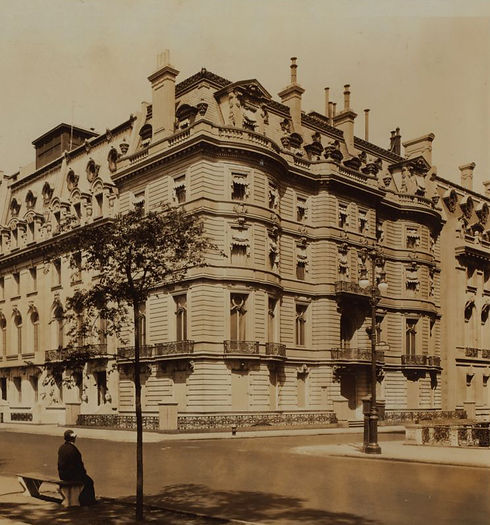
The Kentucky estate of Edith DeLong’s father, James Ben Ali Haggin, was broken up when he died, and Green Hills was razed, leaving only the mansion’s four stately marble pillars, now a Central Kentucky Landmark. James was posthumously inducted into the National Museum of Racing and Hall of Fame in Saratoga Springs, New York as a “Pillar of the Turf” in 2022. The Ben Ali Stakes is run every year at Keeneland in Lexington.
James’s Manhattan mansion at Fifth Avenue and 64th Street was demolished in 1930, along with the William Guggenheim house and the Frank Jay Gould mansion, to make way for the illustrious 16-story apartment building designed by Rosario Candela, 834 Fifth Avenue.
Villa Rosa, his opulent Newport mansion known for its grand copper dome and pastel walls, was torn down in 1962.
The family’s collection of 19th- and early-20th-century American and European artwork, which James initiated to decorate his 61-room Nob Hill mansion in San Francisco, is today housed at The Haggin Museum in Stockton. Among its holdings is the largest collection of original artwork by J.C. Leyendecker.
Five generations of DeLongs lived in Z.I.’s stately Glen Street home. In 1965, his decendant John DeLong Austin, Jr., who had once lived in the house, established the Glens Falls Historical Association with its board of trustees, to which the house was gifted to be its headquarters and a museum to showcase its collection of artifacts. Today, The Chapman Museum—named in memory of Mabel DeLong’s second husband, Frederick B. Chapman—presents the history of the Glens Falls-Queensbury community and its connection to the Adirondack region. Among its holdings is The Stoddard Gallery — 3,000 images by quintessential Adirondack photographer Seneca Ray Stoddard. The Zopher DeLong House was added to the National Register of Historic Places in 1984.